Categories
Solar Power

How Solar Energy Can Change Your Life, And the World

One of the recent technology trends making waves on the globe right now is the significant use of solar energy systems to generate clean, non-polluting electricity and to also curb other issues that directly affect the environment. Due to different global warming concerns that are depleting the Earth’s resources, innovators have found a way to harness the sun’s energy towards creating sustainable solutions that they hope would eventually replace conventional sources of energy.
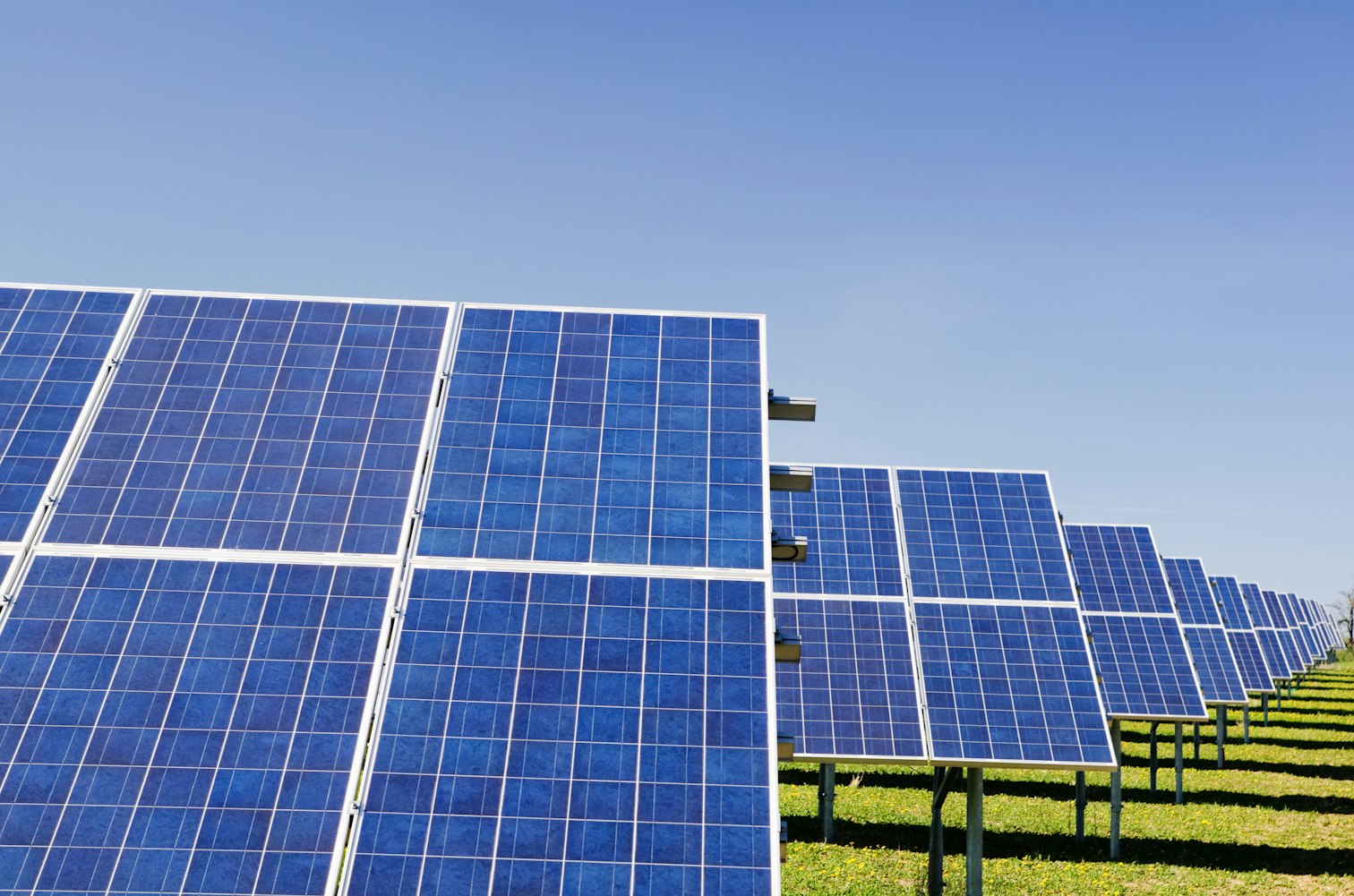
Solar is driven by rapid expansion particularly in developing countries as it is gradually gaining stance as the most desirable option for securing power. Clean energy investments in some of these countries rose 36% to $131bn with nations like Brazil, South Africa, and India showing impressive leads regarding the use of solar energy plants.

More news is rapidly gaining ground around solar energy. Recently, the United State’s energy department announced an additional $10 million to be used for National solar training programs. World Bank also provided a mega $750 million for rooftop solar PV in India. With a focus on private companies, Soltec, a leading supplier and installer of single-axis solar tracker equipment recognized the importance of solar towards birthing a new alternative to power and a recent development of a utility solar tracker innovated to meet extreme climate conditions.

The numbers have also been convincing as renewables recorded about 9.1% of the world’s electricity in 2014, nearly a percentage increase from the previous year. These numbers got investors wanting more than just lurking around, which has been evident in energy investments showing a 17% increase in 2014, compared to 2013.

How does this affect human beings and the environment at large?

Well, solar energy innovations have several impacts in our world today. Most importantly are their effects on our daily lives and on the environment.

Maximizing Solar Energy in our Daily Lives

One of the most remarkable reports about solar energy solutions is that it caters to basically all the energy needs in a home. From lighting to heating, this can be utilized by first identifying energy sources and installing the right equipment with solar energy resolutions. The use of equipment made with such solutions, help reduce a good percentage of your energy bill through solar panel installation projects on places like rooftops.

According to facts in a US independent report by the Oak Ridge National Laboratory “2008 ACEEE Summer Study on Energy Efficiency in Buildings”, installing a metal roofing system ensures that homeowners save an average of 25% of their energy bill. Based on a strapping system of 4 inches between the plywood and the metal on top, homeowners can save up to 40% in home cooling costs in the summer, and 10-15% in home heating costs.
Even more interesting is the fact that some metal roofs can contain about 30-60% of recycled metal content and are 100% recyclable at the end of their service lives, without suffering material degradation. This ensures that most times, metal roofs will save the landfill space and help protect the environment in the process. By using such solar energy-related installations, home and office owners can be sure of maximize its benefits while saving costs.

Despite specific solar-related equipment, one of the solar power systems can be installed in an entire home or office to cater to all energy needs.

Environmental Benefits

Research has shown some of the deadly results of global warming emissions from sources such as human activities and electrical production, which steadily drive up the planet’s temperature. The rise of this blistering temperature creates significant and harmful impacts on the environment, health, and climate. With a focus on coal mining and natural gas drilling, they can pollute sources of drinking water contrary to fossil fuels.

However, in contrast to the above collisions, renewable energy sources are safer because they produce little to no global warming emissions. This means a reduction of air and water pollution and abundant renewable energy source directly from the sun. Therefore, increasing the supply of renewable energy will reduce global warming emissions to a significant level.

In addition, due to the health hazards (breathing problems, heart attacks, cancer, etc) linked with air and water pollution, generating electricity from renewable energy will offer significant health benefits. The use of wind, solar, and hydroelectric systems positively impact electricity and water resources which affect daily human lives.

Solar is rapidly becoming one of the desirable options for power across the globe, specifically in developing countries. With proper research and investments, renewable energy is on the verge to becoming a staple source of energy while reducing costs, as consumers continue to recognize the need for clean, renewable energy.

With GoShares search, you are able to freely accelerate the expansion of solar energy around our planet.

Categories
Solar Power

Fact: Solar Energy Keeps Getting More Affordable

Thomas Edison once said, “I’d put my money on the sun and solar energy. What a source of power! I hope we don’t have to wait until oil and coal run out before we tackle that.”

The sun keeps rising and the costs keep falling! According to the financial advisory firm Lazard, the cost to produce one megawatt-hour of solar fell an incredible 86 percent between 2009 and 2017. Better yet, that means the cost of solar in 2017 was less than half the price of coal the same year.

Bottom line? Solar is a technology, not a fuel. And as technology develops, it becomes cheaper – unlike finite fossil fuels.

And it’s important to remember that the market price of fossil fuels does not reflect the price we all pay as they’re burned. It doesn’t account for the medical costs to treat asthma, the tax dollars to rebuild after a flood, or the human cost of a hurricane strengthened by climate change. This tells Big Polluters that they can dump unlimited carbon pollution into the atmosphere without any consequences.

But when we use clean, renewable solar energy to power our homes and businesses, we protect our health and our climate.

This is why GoShares is focused largely on Solar Projects right now. With the cost of solar continuing to fall at a rapid pace, the shares you earn from your searches with GoShares will have a greater impact.

Categories
Solar Power

Making Home Solar Happen: Do Panels Make Sense For My Home?

Home solar power is more popular than ever in the United States. Buoyed by a dramatic drop in costs over the last decade, solar installations have enjoyed a 50 percent year-to-year average growth rate – and it shows no signs of slowing down.

According to the Solar Energy Industries Association (SEIA), solar currently produces enough electricity to power more than 12.3 million homes. In 2018, over 10,000 MW of solar was installed in the US – more than double the capacity installed just five years earlier.

Over 1.9 million US homes now feature solar installations, with that number expected to cross the 2 million mark this year. (For perspective, in three short years, home solar has nearly doubled in size – up from 1 million installations in 2016.) It’s expected to hit 4 million by 2023.

And thank goodness.

Solar now annually offsets more than 73 million metric tons of CO2 emissions. That’s equivalent to planting nearly 1.2 billion trees or taking 15.6 million vehicles off the road. Now, imagine what those numbers will look like when we reach those 4 million home installations in 2023.

The even better news is, we’re only scratching the surface. To get a broader sense of solar’s true potential, consider this: More energy from the sun strikes the Earth in one hour than all of humanity consumes in a year.

Has all this awesomeness got you – like so many people across the country and around the world – thinking about getting in on the action?

Good! But first, you need to do your research. Luckily, you’ve come to the right place.

WHAT IS HOME SOLAR?

When we talk about “home solar” what we’re talking about is distributed photovoltaic solar (or PV solar). The National Renewable Energy Laboratory explains the name comes “from the process of converting light (photons) to electricity (voltage), which is called the PV effect.”

More specifically, PV panels do so “by allowing photons, or particles of light, to knock electrons free from atoms, generating a flow of electricity,” according to Live Science.

In a nutshell, if you have solar on your roof, the panels create electricity and the system’s electrical panel sends power to your lights and appliances.

And there’s never been a better time to think about making the leap: “An average-sized residential system has dropped from a pre-incentive price of $40,000 in 2010 to roughly $18,000 today,” SEIA reports.

We’re with you that $18,000 is no small chunk of change, perhaps especially to a homeowner balancing a mortgage, car payment, and kids’ piano and karate lessons. But that number also doesn’t take into account the many incentives available to solar customers or the multiple new forms of solar financing that have emerged in recent years.

Many of these financing options allow customers to put solar on their rooftops at little or no cost up front. (More on that in the next blog in our series.)

To say nothing of the long-term energy savings and increased property value a home solar system offers.

So, it’s clear: Installing a home solar panel system is a fantastic, fiscally-smart clean energy option. But none of that matters all that much if your home itself just isn’t a good or effective fit for the panels themselves.

SO, WHAT MAKES A HOME A GOOD FIT FOR SOLAR PANELS?

The direction your roof faces.

The position of your house in relation to the sun will determine how much solar energy you can produce – and thus whether it’s a worthwhile investment for you.

In the US, “south-facing roofs are the most productive for solar, followed by west-facing and then east-facing roofs. North-facing roofs are the least desirable for solar, and many people rule them out,” according to the Washington Post.

Be mindful of the total amount of sunlight hours your home receives, in general. Even a south-facing roof will spend a fair amount of the late fall, wintertime, and very early spring in more darkness than light if it’s located in a high northern latitude (think Alaska and perhaps even the most northern parts of states like Minnesota or North Dakota).

And while solar panels do still produce power on cloudy days, obviously the more direct sun they receive the better. If your local weather patterns tend to be truly dominated by very cloudy skies, solar panels will not be as productive for you as they might be for someone in the Great Plains, Sunshine State, or the Nevada desert.

The size and angle of the surface.

The average home solar system is five kilowatts, requiring 20 normal panels. To accommodate a system of this size, you’ll need 500 square feet of space, or about 100 square feet of area per kilowatt of solar capacity.

As for the angle of your roof, 30 degrees is ideal – but solar panels will work on roofs ranging from flat (though they may need to be installed on tilted tracks) all the way up to 45 degrees.

The roof’s construction.

What we really mean here is “age and materials.” How old your roof is and what it’s made of are important to whether solar panels are a smart investment for a few reasons.

Keep in mind that solar panels are built to last – many come with warranties of 25 years or more. If your roof is older or you expect it will need to be fully replaced (versus more typical, piecemeal maintenance or repair) inside that window, adding panels to it now will mean additional expenses because you’ll need to remove them before demolition of the old roof. Later, you’ll have to reinstall the panels on the new one. Best to replace the roof first then install a solar system.

As for materials, asphalt shingles or corrugated metal roofing make for the easiest installation of solar panels.

How long will this be your home?

Like your home itself, a solar panel system should be looked at as an investment.

While you’ll begin to experience energy savings as soon as your panels are up and running, it may take some time for your solar panels to “pay for themselves,” so to speak (for your energy savings to cover the cost of the system).

EnergySage reports that the average American family spends a little over $1,335 a year on electricity. And how much your solar panels will save you annually in any given place is likely to vary substantially because utility electricity prices differ from state to state and can be volatile in nature.

Average sunlight in your region and the scale of the system you install are other factors that will impact the amount of electricity your system produces and your attendant annual energy savings.

The final cost of a system is also likely to vary from place to place based on your state and local incentives.

All of which is to say, the length of time it will take for you to see a return on your investment is highly variable. There’s no one answer as to when your system will have paid for itself in energy savings. It could be as little as six or eight years – the “typical solar payback period in the US.” It could be several more than that.

You should keep this in mind before investing in a home solar system. If you do not expect to remain in your home long enough to enjoy the savings solar can offer, you should think hard on whether it’s the best option for you at this time.

Regardless of whether you have solar panels installed on your home or not, you can partake in the green revolution for free by searching with GoShares and donating your share toward solar projects around the globe.

Categories
Solar Power

How Solar Power Will Empower the World

Of all the renewable energy sources we have to choose from, solar power has by far the most potential to supply all our energy needs into the foreseeable future. That’s because it’s practically infinite. It comes from the Sun — the largest power source in the solar system — and the sun isn’t going anywhere for billions of years.

And even though we’ve had the ability to harness the power of the sun for over a century now, it hasn’t become efficient enough or cheap enough to compete with fossil fuels until very recently. Now we’re in the midst of a solar power revolution that promises to change the world in much the same way as computers have.

For the first time ever, the declining cost of solar power is putting it in direct competition with fossil fuels. In some parts of the world, solar power is even cheaper than oil. And it’s expected to keep dropping.
But the technology behind this energy revolution is not new.

In fact the first solar cell was created in 1883 — only a year after the first coal-fired power station was built by Thomas Edison. Just a few decades earlier, it had been observed that an electrical current could be generated in some materials when exposed to sunlight. This was the photovoltaic effect. If someone could harness this effect, electricity could be generated with no fuel whatsoever — wherever the sun was shining.

But this early solar cell only converted about 1% of the sunlight falling on it into electricity, making it no match for Edison’s coal plants. For the rest of the 19th century and much of the 20th, the dream of solar power would remain just that — a dream — and fossil fuels would dominate our energy landscape. It wouldn’t be until the 1950s when solar cells finally became efficient enough to be a reliable power source.

Through their work developing the silicon transistor — which would lead to the electronics revolution — Bell Labs developed the first practical solar cell in 1954.

NASA became one the earliest consumers of these new and improved solar cells and solar panels soon became commonplace on satellites and spacecraft.
But the solar power boom we’re seeing today didn’t really take off until the oil crisis of the late 70s. The scarcity of fossil fuels and rising gas prices at the time motivated a whole new generation of entrepreneurs to envision a world where solar power could wean us off oil dependence.

Richard Swanson was one of these entrepreneurs. After researching solar cell technology at Stanford, Richard Swanson founded his solar power company, SunPower Corporation, in 1985. But he is most well known for the law that bears his name — Swanson’s Law. Swanson’s Law states that solar panel prices will decline by 20% every time the capacity of the solar industry doubles. Which basically means that the more solar panels we make, the cheaper they get. And that is exactly what is happening now.

In 1977, the price of a solar panel per watt was about $76. Today, in the US it hovers around 50 cents. Commercial costs, including all the setup and installation, is just below $2 and it’s expected to be under $1 by 2020. By comparison, the construction costs of a coal power plant — generally the least expensive power source — are a little over $2 per watt. Much of this price decrease has happened only in the last decade or so.
And it hasn’t just decreased in that time — it has plummeted.

Much like Moore’s Law — which projected the exponential growth of computer processing power — Swanson’s Law projects the exponential growth of solar cells. And the same exponential growth that put a computer in most of our pockets is giving us cheap, practically infinite energy.
The price of solar power has dropped so precipitously and the growth of manufacturing has risen so fast that the International Energy Agency has had to consistently revise its solar power estimates to keep up with the growth.

All this growth means solar power is reaching grid parity in many locations all around the world. Grid parity is the point at which the cost of an energy source becomes equal to or less than the localized cost of electricity. This figure varies from location to location because the cost of electricity varies.

Grid parity is an important benchmark because it’s the point where solar power becomes a financially feasible alternative to fossil fuels. Generally, if you live in a sunny place like southern California, solar power is now just as cheap as fossil fuels. And if we want to slow climate change, we have to start burning less fossil fuels.

In 2011, Germany became one of the first countries in the world to reach grid parity with solar power. This is pretty astounding because Germany isn’t necessarily renowned for its sunny weather. Heavy investment in solar power led to grid parity there but countries all over the world are reaching grid parity without any government subsidies.

Grid parity has been reached in about 30 countries so far — with more than half of all the photovoltaics deployed in the coming years expected to be in China and India.
Right now, 20 US states are currently at grid parity for solar power. 22 more are expected to reach that goal by 2020. That’s 42 states out of 50 that could start relying on solar power as much as fossil fuels.

Even the state I live in — Illinois — is expected to reach grid parity very soon. And I can tell you from experience, Illinois is not known for its sunshine. At this rate, solar power is expected to be the world’s number one energy source by 2050.

For one, although the power supply is free and limitless, it is not always available. It could be cloudy or it could be night. But large capacity batteries could store electricity for use during the dark times and we could always burn a little fossil fuel to fill in the gaps. Even with an intermittent electricity supply, widespread solar would help ease the use of fossil fuel by significant amounts.

Solar power requires no fuel (except photons and they are virtually limitless). It is carbon neutral. Even the carbon emitted in the manufacture of solar panels is offset by the carbon saved through the use of solar power over fossil fuels. And most solar photovoltaic systems have an estimated lifespan of 30 years or more. Solar not only changes where the bulk of our energy comes from, but it also has the potential to change how our energy is distributed.

No longer will electricity have to generate at massive central power stations as Thomas Edison envisioned. Solar panels can be set up right where the electricity is needed — on the roof of your home, or on the pavement of your roads. Individuals could own their own solar panels and generate electricity for themselves or even sell excess energy back to the grid.

Just as computers decentralized communication and information, solar power could decentralize power generation. This could be especially useful in disaster areas or regions of the world with deteriorating power grids or no grid at all — where people might have no other way of obtaining reliable electricity. It doesn’t require access to a mine or an oil field. After all, the Sun shines everywhere — regardless of national boundaries and geography.

Solar power could not only empower the citizens of developed countries to take charge of their own energy generation, but it could also allow the millions of people on this planet who have never had electricity to finally have a cost-effective way of obtaining it. It’s hard to overstate the wide-ranging effects this solar power revolution could have. After all, we’re talking about the Sun here.

Even nuclear energy doesn’t hold the same potential energy reserves as our Sun. And the pursuit of nuclear fusion seems kind of redundant when you realize we already have a working fusion reactor right up in the sky, providing us with more energy than we will ever need.

While our energy future will always be powered by a variety of energy sources and fossil fuels won’t be eliminated entirely — not in the near term anyway — solar power is the only energy source we have at our disposal that promises to give us clean energy from an unlimited source.

This next technological revolution is already underway. It’s been underway for over a hundred years now, but for decades, solar power was stymied by high cost and poor efficiency. But both of those barriers are gone now. There is no reason to think that solar power couldn’t be as ubiquitous and as widely available as the sunlight that powers it. Whether it lives up to this potential depends solely on us.

The sun has been here for billions of years and it will continue to be here billions of years after we’re long gone. Our time on this planet is a finite resource. But the choices we make now will determine whether or not it is renewable. This is why we created GoShares, to make an everyday action into a force to save our planet.